AI Should Help You Live, Not Live Your Life for You
Orchid’s launch video sells AI as a fix for relationships and ordinary life. Assistance is useful. Replacing attention, accountability and care is not.
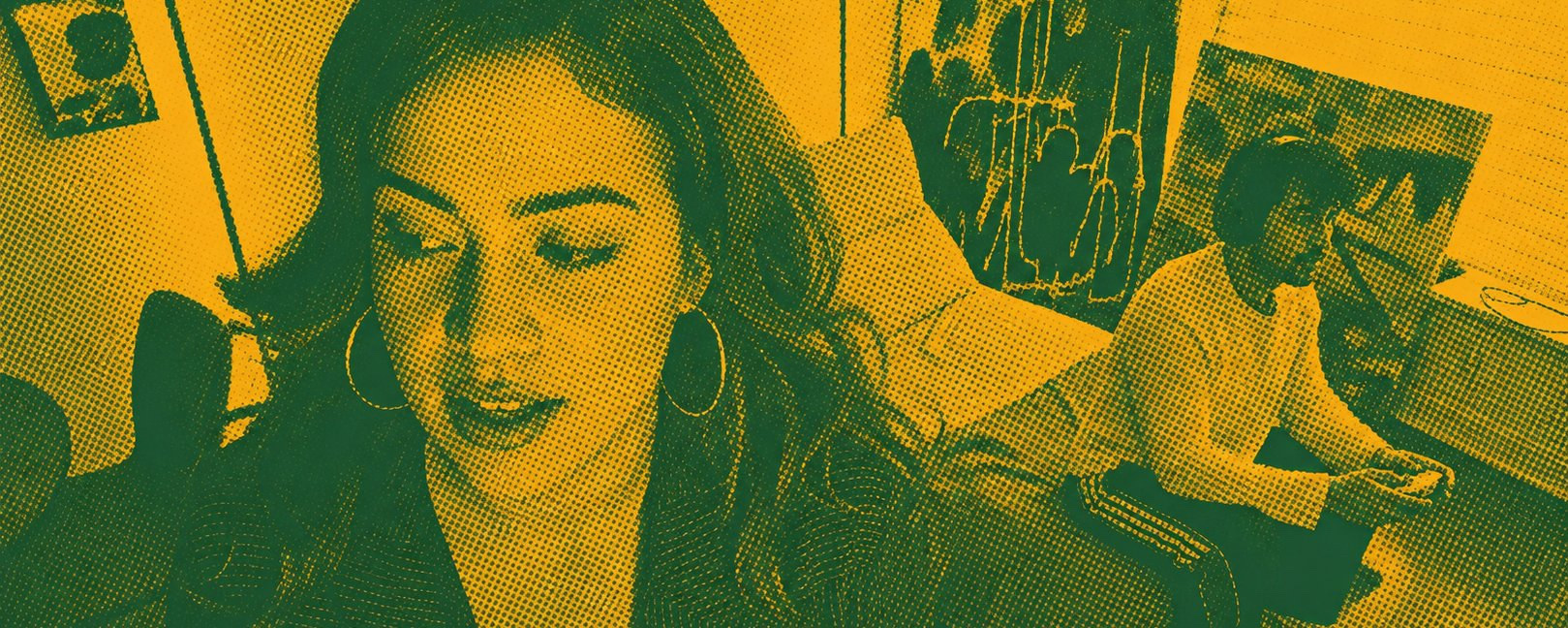
I had just finished watching MoistCr1TiKaL react to the launch video for Orchid AI, and I genuinely had to stop for a moment and ask what the fuck I had just watched. I have nothing against Orchid as a company, and I have respect for anyone trying to build a useful general-purpose assistant. The underlying product may be technically impressive, and parts of it could become genuinely valuable. The launch video, however, presents one of the bleakest possible visions of what AI assistants are apparently supposed to become.
The video follows a couple around their anniversary. The boyfriend has forgotten about it, appears more interested in playing games, and has done nothing to organise the evening. Rather than the couple dealing with the problem directly, Orchid steps in. The assistant reminds him, finds a restaurant, books the table, orders flowers and performs nearly all the practical and emotional work required to stop the evening from collapsing. The man then gets to participate in the pleasant outcome as though his own thoughtfulness created it, despite the fact that a piece of software noticed the problem, understood his partner better than he did and repaired the situation on his behalf.
I understand why this was chosen as the launch advertisement. It is memorable, it creates controversy and it demonstrates that the assistant can take actions rather than merely answer questions. However, it also reveals something deeply uncomfortable about the future some AI companies appear to want. The assistant is no longer being shown as a tool that helps a human make better decisions. It is being shown as a replacement for attention, responsibility, honesty and basic human consideration.
If AI has to save your relationship, your relationship is probably already dead
Forgetting an anniversary can happen. People become distracted, make mistakes and occasionally let down the people they care about. That is part of being human. The important part is what happens afterwards. You acknowledge that you forgot, apologise honestly and accept that the other person may be angry or hurt. You do not quietly ask an AI agent to manufacture the appearance that you remembered while allowing you to avoid the uncomfortable part.
If you are incapable of saying, “I fucked up, I forgot, and I am sorry,” then the problem is not that you lack a sufficiently advanced personal assistant. The problem is that you are avoiding accountability. An AI can book the restaurant, order flowers and put the anniversary into your calendar for next year, but it cannot make the underlying thoughtfulness real. It can produce the outward evidence of care while allowing the person involved to remain exactly as careless as they were before.
That is what makes the video so strange. Orchid is not merely helping the boyfriend express something he already feels. It is noticing the relationship problem, informing him that it exists and solving nearly every practical part of it for him. The assistant effectively becomes a third participant in the relationship, managing the disappointment of one person and the incompetence of the other. The couple avoids the real conversation because the software smooths everything over before either of them has to confront what happened.
If your partner only appears thoughtful because an AI remembered your anniversary, selected your flowers and arranged your evening, what exactly are you celebrating? You are not celebrating that the person understands you. You are celebrating that their software account does.
Relationships are supposed to contain difficult conversations
A real relationship between two people is not a permanently smooth experience. You are going to encounter hurt feelings, insecurity, jealousy, disappointment and perhaps betrayal. You may develop trust issues. You may have to admit that you were wrong. You may have to confront the possibility that something between you is no longer working in the way it once did.
Those moments are uncomfortable, but they are also where relationships become real. Two people can sit down and have the brutal conversation about what they dislike, what has changed, what has hurt them and whether they are both willing to improve. They can work through it, or they can decide that the relationship is no longer right for either of them and separate honestly. Neither outcome is pleasant, but both require maturity.
Some of the most uncomfortable conversations are the ones that matter most. They force people to say what they actually feel instead of hiding behind politeness, avoidance or resentment. They create the possibility of repairing trust because both people have to participate. They also create the possibility of ending something that has become unhealthy rather than dragging it forward through habit.
Orchid’s launch video seems to remove all of that difficulty and present the removal as progress. The assistant notices the problem, brokers the response and restores the appearance of harmony. The couple receives the convenience of a repaired evening without confronting the underlying failure. The man does not need to explain why he forgot. The woman does not need to tell him what the forgetting meant to her. Neither of them has to risk an awkward conversation because Orchid has already turned the problem into a restaurant reservation.
That may be convenient, but convenience is not the same as emotional health. Sometimes the friction is the point. Owning up to your mistakes is difficult because it requires you to accept that you caused harm. Listening to what your partner dislikes about you is difficult because it threatens the version of yourself you prefer to believe. Deciding whether to stay together is difficult because there may not be a painless answer. An AI assistant should not become a way to bypass those experiences entirely.
Some things need to remain human
I use AI every day. I use it for programming, debugging, research, brainstorming, learning unfamiliar concepts and working through problems. It has made me dramatically more productive and has allowed me to build things that I would have struggled to create alone. I am not frightened of the technology merely because it is new, and I do not believe every automated task represents some attack on humanity.
There are many areas where an assistant like Orchid could be genuinely useful. It could summarise an inbox, identify emails that require a response, reorganise meetings, remind someone about a bill, prepare documents or find information buried inside files. I could send it a voice message saying, “Organise my day tomorrow,” and it could turn that into a clear set of calendar entries, reminders and priorities. That is the kind of personal assistance that could actually remove friction from someone’s life.
It could also help after meetings without replacing the human part of them. I could finish a call, send Orchid a voice note explaining what went well, what decisions were made and what needs to happen next, and the assistant could turn that into organised notes, follow-up tasks and calendar reminders. I could tell it that I have arranged a date for Friday and ask it to put the details into my calendar. None of that requires Orchid to decide what my relationships mean or manufacture affection for me.
The issue is not whether AI should ever book a restaurant. Of course it can. Someone travelling for work could ask an agent to find somewhere nearby and reserve a table. A couple could use one together to compare restaurants or check availability. The distinction is whether the person remains responsible for the choice and whether they understand what the agent is doing.
Your anniversary is not meaningless administration. Remembering what your partner likes, choosing somewhere they would enjoy and making the effort to arrange it are part of the gesture. You can automate the tedious part of entering the booking details, but you should still choose the place. You can ask for ideas, but you should still make the decision. You can set a reminder, but you should not need an AI to discover that your relationship exists and repair it before your partner notices.
The human has to remain in charge
AI is only useful when the human remains in charge of the loop. That matters for coding, research, administration and personal tasks. The machine can suggest, organise and execute, but the person still needs to decide what should happen, understand the consequences and verify anything important.
You can absolutely use an AI agent to book a restaurant for you. The sensible version is that you choose the restaurant, confirm the time and allow the assistant to make the reservation while you watch over the action. It might say, “I found a table at 5:30 at the restaurant you selected. Shall I book it?” You approve it, receive the confirmation and remain responsible for the plan.
The dangerous version is allowing the agent to infer that your relationship is in trouble, decide what romantic gesture should repair it, select the location, choose the gifts and take action without meaningful participation from you. At that point, the human is no longer being assisted. The human is being carried through their own life.
Human oversight is more important than ever as agents gain the ability to take real-world actions. AI systems still make errors. They misunderstand instructions, choose the wrong date, hallucinate availability and occasionally claim that something has been completed when it has not. That is manageable when the person is actively supervising the task. It becomes much more serious when the person has mentally checked out and assumes the agent will run everything correctly.
AI is not bad technology. In my opinion, it creates far more good than harm when it is used properly. The problem is not the existence of the feature. The problem is the philosophy behind the feature and the way companies choose to present it.
Not all publicity is good publicity
I can imagine the conversation inside the marketing meeting. The video is provocative, it demonstrates that Orchid can take actions, it generates discussion and it gives people something memorable to react to. On a spreadsheet, that probably looks brilliant. The impressions go up, the brand name spreads and thousands of people who had never heard of Orchid suddenly know that it exists.
The problem is that attention is not automatically valuable. Companies love repeating the idea that all publicity is good publicity, but that is obviously not true. If people are actively taking the piss out of your product because the vision behind it appears stupid, invasive or emotionally bleak, they are not secretly becoming enthusiastic customers. They are remembering your company as the one that advertised AI by showing an incompetent boyfriend outsourcing his relationship and an assistant berating someone about cereal.
Controversy can work when the audience understands the joke or when the outrage reinforces something appealing about the product. This does neither. The criticism is aimed at the fundamental purpose being advertised. People are not merely objecting to an edgy tone or an unusual creative choice. They are looking at Orchid’s proposed future and saying, “I do not want that anywhere near my life.” Generating millions of views around that reaction is not necessarily a marketing victory.
PCIFIC could generate enormous attention tomorrow if I travelled to Cambodia, dug up Pol Pot’s grave, positioned his remains in front of a laptop and released an advertisement showing his lifeless body buying a GPU from the marketplace. People would certainly talk about it. The company name would spread everywhere. News outlets would cover it, social media would explode and PCIFIC would receive more impressions in a week than it had received in its entire existence.
None of that would make it good marketing. People would remember PCIFIC as the deranged company that desecrated Pol Pot’s grave to advertise refurbished graphics cards. The attention would be enormous, but it would be attached permanently to disgust, ridicule and disbelief. That is not a customer-acquisition strategy. It is reputational suicide with a high engagement rate.
The example is intentionally ridiculous, but the principle is simple. Awareness without trust, desire or respect is not automatically useful. Sometimes a campaign does not introduce the audience to your product. It permanently attaches your product to the reason they dislike it.
Orchid may have proved that its assistant can perform actions, but it chose actions that made the product appear less desirable. It demonstrated technical capability through a vision of dependency, avoidance and constant digital interference. The advertisement may have generated traction, but traction towards the conclusion that your product represents a miserable future is not the kind of traction a company should celebrate.
What happens when your life becomes dependent on the subscription?
There is another part of this future that worries me. What happens when you have allowed an AI assistant to organise your calendar, manage your messages, maintain your shopping list, remember your anniversaries, choose your gifts, book your plans and quietly hold together your relationships, and then the company changes the price?
You are no longer deciding whether a chatbot subscription is worth the money. You are deciding whether you can afford access to the system that now operates half your life. The product has become sticky in the most personal possible way. Cancelling it does not merely mean losing a feature. It means recovering responsibilities you may no longer remember how to handle.
This is how genuine lock-in could emerge. The assistant learns your routines, your contacts, your preferences and the structure of your relationships. It knows when your partner’s birthday is, which restaurant you usually visit, what groceries you buy, how you write messages and which tasks you routinely avoid. Once all of that behaviour has been handed over, leaving becomes increasingly difficult.
The darker concern is that it is no longer entirely your life. It becomes the version of your life that the AI company has designed the assistant to encourage. The company decides what deserves a notification, what behaviour should be corrected, which choices should be presented first and what kind of person the assistant nudges you to become. You may believe you are making your own decisions while constantly receiving suggestions shaped by another company’s incentives.
This is what I mean when I say the AI starts living in your life. You are physically present, but increasingly passive. You ask it to do this, then that, then this again. It chooses what needs attention, handles the uncomfortable parts and fills every empty moment with another intervention. Eventually, you risk becoming barely conscious of the systems directing your day because delegation has become the default.
A useful assistant should give control back to the person. It should not make the person dependent on the assistant’s continued existence.
What happens when the agent gets it wrong?
There is also a much more ordinary problem with treating AI agents as unquestioned managers of your personal life: they fuck things up.
What happens when the restaurant has tables available, but the agent incorrectly reports that there are none? What happens when it books 6:30 instead of 5:30, chooses the wrong branch, orders flowers your partner is allergic to or schedules everything on the wrong day? What happens when a connected service fails silently and the assistant confidently tells you everything has been handled?
When an AI makes a mistake in a coding task, I can review the diff, run the tests and correct it. When it summarises an email badly, I can read the original. When it gives me a poor suggestion, I can ignore it. Once an agent is allowed to perform real-world actions on my behalf, blind trust becomes far more dangerous.
That does not mean agents should never take actions. It means users must remain aware of what the system is doing and responsible for verifying anything important. A good assistant should reduce friction while keeping the human clearly in control. It should say, “Here are three available restaurants, and this is the one I think suits you best. Shall I book it for 5:30?” It should not quietly manufacture an entire romantic gesture and then allow someone else to pretend it came from them.
The more personal the task, the more important that distinction becomes.
I do not want an AI judging my cereal
The anniversary story was not even the only strange part of the video. Another sequence shows the assistant monitoring someone while they look through their fridge and repeatedly notifying them about groceries. It comments on the cereal, mentions what is running out and inserts itself into an incredibly ordinary moment that no sane person previously believed required artificial intelligence.
Why would I want that? Sometimes I want to open the cupboard, pour some cereal and eat it in peace. I do not need a machine hovering over my shoulder, analysing the contents of my fridge and turning breakfast into another stream of notifications. I do not want every mundane part of my life converted into an optimisation problem.
A genuinely useful grocery assistant could maintain a shopping list, warn me when something important has expired or suggest meals from ingredients I already own. That has obvious value. But there is a fine line between assistance and digital nagging. If the assistant comments every time I run low on cereal, forget to buy milk or eat something it considers suboptimal, it stops feeling helpful and begins to feel like an irritating parent permanently installed inside my phone.
AI companies often seem unable to imagine a future in which intelligence is available without constantly demanding attention. They see every piece of personal context as another opportunity for a notification, prompt or intervention. The result is a life in which nothing is allowed to remain quiet. Your inbox talks to you, your fridge talks to you, your calendar talks to you, your watch talks to you, and eventually your relationship talks to you through an agent because neither person can be bothered to speak directly.
That is not a better life. It is merely a more supervised one.
Why is this the future they chose to advertise?
This is perhaps the most confusing part of the entire launch video. AI can already do genuinely useful things, so why choose this?
Why not show Orchid helping someone organise an overwhelming day through a voice note? Why not show it turning a messy description of meetings, errands and deadlines into a clear calendar? Why not show someone leaving a meeting, explaining the outcome aloud and receiving properly structured notes, follow-up tasks and draft emails? Why not show it helping a disabled person navigate repetitive digital administration, helping a student organise research or helping a small business owner manage the tasks they do not have time to handle?
Why is the aspirational vision an incompetent boyfriend outsourcing his relationship and a fridge assistant berating someone about cereal?
The advertisement does not merely show a feature. It reveals what the company believes the feature is for. It presents emotional responsibility as inconvenience and constant intervention as assistance. That message matters because marketing shapes what people expect technology to become.
AI should help people code, learn, brainstorm, understand difficult concepts, organise work and solve problems. It should help scientists explore treatments, engineers design systems and ordinary people deal with administration that consumes their time. Those are meaningful uses.
A machine quietly covering for someone who cannot remember their own anniversary is not a meaningful vision of progress. It is a warning about what happens when convenience becomes the only value the industry understands.
The industry keeps confusing assistance with replacement
The wider AI industry repeatedly markets technology by showing it replacing the parts of life that people actually value. Companies believe that because AI can perform part of an activity, people must want the entire activity performed for them. They fail to distinguish between the tedious labour surrounding an experience and the experience itself.
AI can help somebody learn to write, but it should not replace the letter they genuinely wanted to write. It can help plan a date, but it should not replace the thoughtfulness behind planning it. It can recommend a meal, but it does not need to judge every item someone takes from the fridge. It can support communication, but it should not become the entity through which couples communicate.
The best AI systems expand human capability. The worst ones offer to remove the human from situations where being human was the entire point.
AI needs boundaries because people will always choose convenience
The darker possibility is not that AI becomes conscious and decides to destroy human relationships. It is that ordinary people gradually hand over responsibility because delegation is easier.
Every individual action will appear harmless. Let the assistant remember the anniversary. Let it choose the flowers. Let it write the apology. Let it reply to the difficult message. Let it decide which friend needs a response. Let it generate birthday wishes. Let it maintain the relationships automatically.
Eventually, you are no longer using AI to support your life. You are asking it to perform the evidence that you are participating in your own life.
That temptation will be powerful because relationships require effort. They involve remembering details, tolerating discomfort, apologising, planning, listening and occasionally doing things you would rather avoid. An agent that promises to remove all of that friction may sound appealing, particularly to someone who is already overwhelmed. But the friction is not always accidental. Sometimes it is the mechanism through which trust and intimacy are built.
You cannot automate accountability and still call it accountability. You cannot outsource attention and expect another person to feel attended to. You cannot ask a model to manufacture sincerity and then complain that relationships feel increasingly artificial.
AI should remove pointless work. It should not remove the parts of life that give the work meaning.
The future I actually want
I want AI that helps researchers understand diseases, engineers design better systems and developers build more ambitious software. I want tools that teach people, explain difficult concepts, translate languages, make technology more accessible and help small teams compete with organisations that have vastly more money.
I also want personal assistants. A good assistant that manages administration, finds information and handles genuinely tedious work could be enormously valuable. Orchid may become one of those products, and its practical integrations with email, calendars, files and other applications could prove genuinely useful. My criticism is not that the company should not exist or that nobody should use it. It is that the launch video chose to present emotional negligence as a problem best solved through automation.
That is not the future I want. AI should stand beside the human, not impersonate one on their behalf. It should help us think, create, learn and act. It should offer options, remove drudgery and give people more time for the parts of life that matter. The point of saving time on email, administration and repetitive work should be that we have more time to spend with other people, not that we can also automate the spending of that time.
An AI assistant can remind you that your anniversary is approaching. It can show you restaurants and available tables. It can place the plan into your calendar after you have decided what you want to do. It can make the booking while you watch and approve the details. That is assistance because the human remains responsible for the intention.
But if it has to recognise that you forgot, discover what your partner likes, arrange the entire evening, manage both sides of the relationship and let you take the credit, it is not assisting you anymore. It is replacing the part of you that was supposed to care.
And at that point, big fella, you are fucking done.